Removing an offshore structure can mean removing an ecosystem. That is the case our Managing Director, Dr Victoria Todd, makes in a new article for Maritime Journal, challenging the assumption that full removal is always the best outcome for the marine environment.
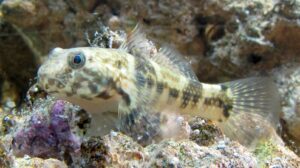
Over the coming decades, ageing oil and gas installations in the North Sea and the first generation of large offshore wind farms will reach the end of their working lives. Decommissioning is usually treated as an engineering task. Victoria asks what exactly is being removed after 20, 30 or 40 years at sea. Steel, concrete, cables and rock protection are colonised by marine life and can become complex habitats for invertebrates, fish, seabirds and marine mammals. OSC has documented this first-hand, using ROV footage to track how fish and invertebrates colonised a North Sea gas platform.
What went into the sea is not what comes out.
Dr Victoria Todd, Managing Director, OSC
Removal brings its own impacts, including underwater noise, seabed disturbance, emissions and the loss of established marine communities. This is not an argument for leaving redundant structures in place: contamination, navigation, fisheries, structural condition and long-term liability can all make removal necessary. The point is that the environmental case for removal needs to be shown, not assumed.
The same question applies to offshore wind. A turbine foundation installed on fairly uniform seabed may, after 20 years or more, support habitat that did not exist before it was built.
There is a public cost too. Through decommissioning tax relief, taxpayers share part of the bill for the UK Continental Shelf decommissioning programme, which the North Sea Transition Authority estimates at £43.4 billion.
Removal should not automatically be equated with restoration.
Dr Victoria Todd, Managing Director, OSC
Drawing on OSC’s work in offshore environmental monitoring, marine mammals, underwater noise and ROV research, Victoria argues that ecological assessment must take place while real decommissioning choices are still open, with engineers and scientists assessing the options together. OSC co-authored a framework for comparing decommissioning options on their net environmental benefit, published in Frontiers in Marine Science.
Read the full article: Offshore infrastructure decommissioning: An environmental balance (Maritime Journal)
Find out more about our decommissioning work and our peer-reviewed publications, or contact us to discuss a project.